
Types of Bar Stools: The Complete Guide
Posted by Allen Hilder on Aug 19th 2026
At a Glance: Bar stools are grouped by six factors:
- Height: counter, bar, and spectator
- Back and arm support: backless, low back, high back, and armrests
- Movement: stationary and swivel
- Material: metal, wood, upholstered, and outdoor-rated
- Style: classic diner, industrial, mid-century, and bucket
- Use environment: kitchen island, home bar, restaurant, and patio
A barstool looks simple until you shop for one. Height, back style, materials, and finish options all shape how the stool feels and how well it fits your space. Seats and Stools has been designing commercial-grade bar stools for restaurants, bars, and homeowners for over 20 years. This guide walks through each group, highlights the most popular styles, and helps you pick the right stool for your space.
Types of Bar Stools by Height
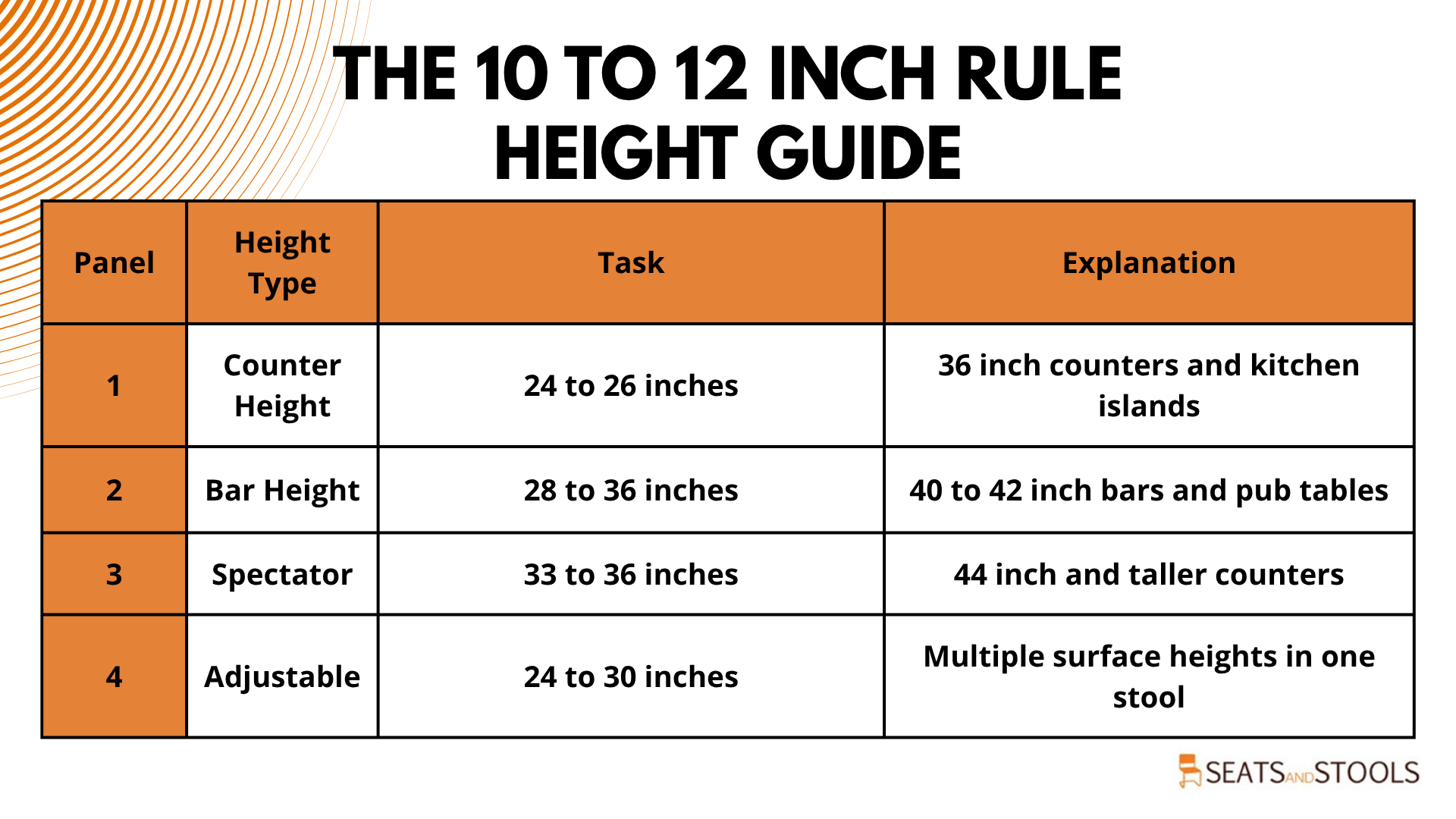
Height is the first thing to check. The wrong seat height leaves guests perched too high or cramped against the counter. Match the stool to your surface using the 10 to 12 inch rule: leave 10 to 12 inches between the top of the seat and the underside of the counter or bar.
Counter Height
Counter stools have a seat height of 24 to 26 inches to fit standard kitchen counters and kitchen islands around 36 inches tall.
Bar Height
Bar height stools have a 28 to 30 inch seat for 40 to 42 inch bars. This is the classic barstool height for home bars, pub tables, and restaurant bars.
Extra Tall or Spectator
For counters at 44 inches or more, spectator-height stools with 33 to 36 inch seats work best.
Adjustable Height
Adjustable stools cover multiple heights in one piece. Our Padded Bucket Bar Stool with Arms adjusts from 24 to 30 inches in 2-inch intervals.
For more on heights, read our counter height vs bar height guide.
Types of Bar Stools by Back and Arm Support
Back and arm support affect how long you can comfortably sit and how the stool fits your space.
Backless Stools: Backless designs tuck under the counter, save space, and give a clean sightline. Our Backless Metal Bar Stool and Backless Wooden Barstool cover both material families. Backless barstools are a great pick for tight kitchen counters.
Low-Back: Low-back stools offer light support while keeping the sightline clear, a modern design choice for open kitchens.
High-Back: High-back stools give the most back support for long dinners and watch parties. Our High Back Bucket Bar Stool is a solid pick.
With Arms: Arms add comfort during longer sits. Plan the extra width when spacing stools along a counter.
Types of Bar Stools by Movement
Swivel Bar Stools: A 360-degree swivel function lets guests spin between the bar, the room, and the TV without scooting the stool. A swivel barstool is a great fit for social kitchens, restaurants, and sports bars. Most swivel stools include a flat swivel plate as standard.
Stationary Bar Stools: Stationary stools have no moving parts to wear out. Quieter and simpler, they are a good option for families with young kids.
Types of Bar Stools by Material
Different materials fit different spaces. Here are the four material families we carry.
Metal Bar Stools: Metal bar stools are the workhorse of the barstool world. Chrome, black, and gunmetal finishes suit industrial, retro, and modern spaces, and metal frames hold up to years of restaurant use.
Wooden Bar Stools: Wooden bar stools are built from solid European beechwood in five finishes: mahogany, walnut, cherry, black primer, and natural. Wood fits classic pubs, rustic wood themes, and mid-century kitchens.
Bucket Bar Stools: Bucket bar stools use a one-piece molded shell that cradles the seat and back as a single form. Varieties include saddle, open back, club, padded arm, and high back, with a range of shallower and deeper seat profiles depending on the build.
Wood and Metal Combo: Combo stools like the Contoured Combo and Brody pair a wood seat and back with a metal frame.
Upholstery adds another layer of customization, with 15 vinyl colors and 20+ fabric patterns available across most models.
Types of Bar Stools by Style
Style is where personality shows up. Here are the main style families in our lineup.
Classic and Traditional: Schoolhouse, Window Pane, Jail House, and Ladder Back stools deliver familiar pub style.
Retro Diner: Chrome finish, vinyl seats, and single-ring or double-ring bases capture the 1950s soda fountain vibe. Our Retro Single Ring and Retro Double Ring bar stools come in multiple heights and vinyl colors.
Mid-Century Modern: Iconic seating like the Breuer Cesca Bar Stools, Paulina, and Danielson combine clean lines and warm wood tones for a sophisticated modern look.
Industrial: Exposed metal, distressed finishes, and utility shapes suit lofts, breweries, and garage bars. Our French-Inspired Galvanized Bar Stool is a good example of the look.
Bistro and Café: The Iceberg CafeWorks Cafe Bistro Stool captures the European café feel for restaurants or breakfast nooks.
Contemporary Modern: Mesh Back, Vertical, Crosshatch, and Solid Metal Back stools work for minimalist homes and modern restaurants.
Themed and Custom Logo: Our Logo Seating collection includes custom logo bar stools with no minimum, plus themed lines like Train Bar Stools and Band Bar Stools for man caves and commercial spaces.
Types of Bar Stools by Use Environment
Residential: Kitchen island seating, home bars, breakfast counters, and dining rooms call for stools that combine style with comfortable seating for daily use.
Commercial and Restaurant: Restaurant bar stools need higher-density foam, tougher upholstery, and reinforced frames. All of our bar stools are built to withstand commercial use, which is why they also hold up at home.
Outdoor: Outdoor bar stools use weather-rated frames and finishes that resist rust and fading for patios and rooftop decks.
How to Choose the Right Bar Stool
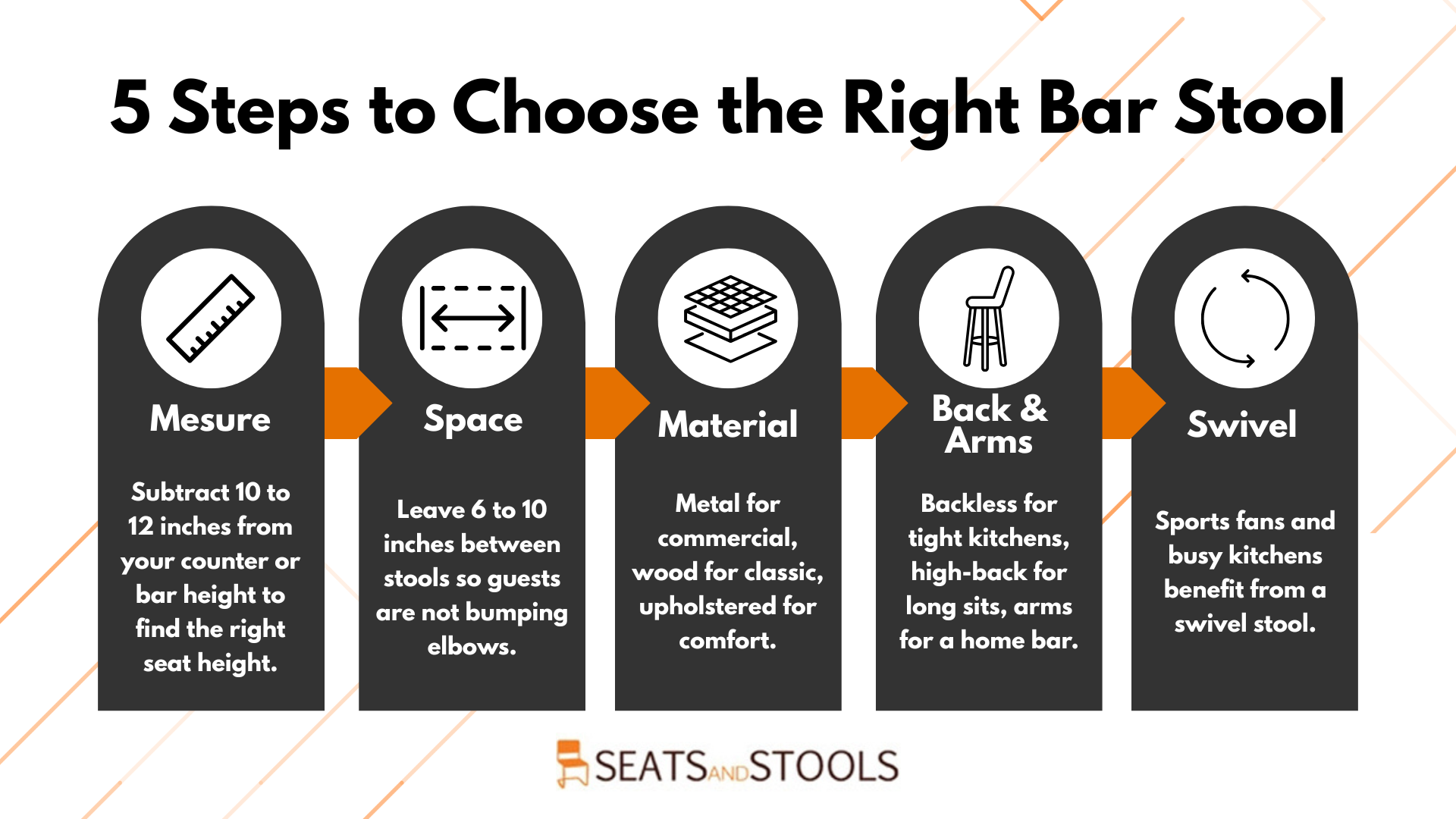
Picking the perfect stool comes down to a few steps:
- Measure your surface height first - Subtract 10 to 12 inches from your counter or bar height for the right seat height.
- Plan for spacing - Leave 6 to 10 inches between stools so guests are not bumping elbows.
- Match the material - Metal for commercial and industrial builds, rustic wood for classic looks, upholstered for comfort.
- Pick your back and arm support - Backless for tight kitchens, high-back for long sits, with arms for a home bar setup.
- Consider the swivel function - Sports fans and busy kitchens benefit from a swivel stool.
Our Measurement Guide walks through sizing in detail. Commercial buyers can also reference the BIFMA seating standards for durability, stability, and load testing.
Find Your Bar Stool at Seats and Stools
We have been designing bar stools for restaurants, bars, and homeowners for over 20 years. Every stool is built to withstand commercial use, and matching chairs are available across most lines. Our full range of seating options, custom finishes, and no-minimum logo program gives you the flexibility to build a space that reflects your style.
Browse our full bar stools collection, the Logo Seating line, or contact our team for help.
Frequently Asked Questions
What are the main types of bar stools?
The main categories are height, back style, movement, material, style, and use environment. Each category covers options like counter or bar height, backless or high-back, swivel or stationary, and metal, wood, or bucket construction.
What is the difference between a bar stool and a counter stool?
A counter stool has a 24 to 26 inch seat height and fits 36 inch counters and kitchen islands. A bar stool has a 28 to 30 inch seat height and fits 40 to 42 inch bars. Match the stool to your surface using the 10 to 12 inch clearance rule.
What is the most comfortable type of bar stool?
For long sits, a bucket bar stool or a high-back stool with arms offers the most comfort. The curved shell of a bucket seat supports the back, and a footrest keeps legs comfortable.
Are swivel bar stools an excellent choice?
Yes, swivel stools work well in social spaces and restaurants because guests can rotate without scooting the stool. Stationary stools are simpler and quieter for families with young children.
What material is the best barstool for a busy space?
Metal is the most durable for industrial and commercial builds. Wood adds warmth for classic and mid-century looks. Bucket and upholstered stools add comfort with a variety of materials.
How many bar stools do I need for my counter?
Plan 6 to 10 inches of space between stools. A 6-foot counter seats three, an 8-foot counter seats four, and a 10-foot counter seats five.